October 4, 2026 · 5 minutes
Everything is curved now, and your room might not want it
Sofas in arcs, tables shaped like clouds, chairs with no straight line in them. Curved furniture is the loudest trend of the year. It suits some rooms beautifully and fights others.
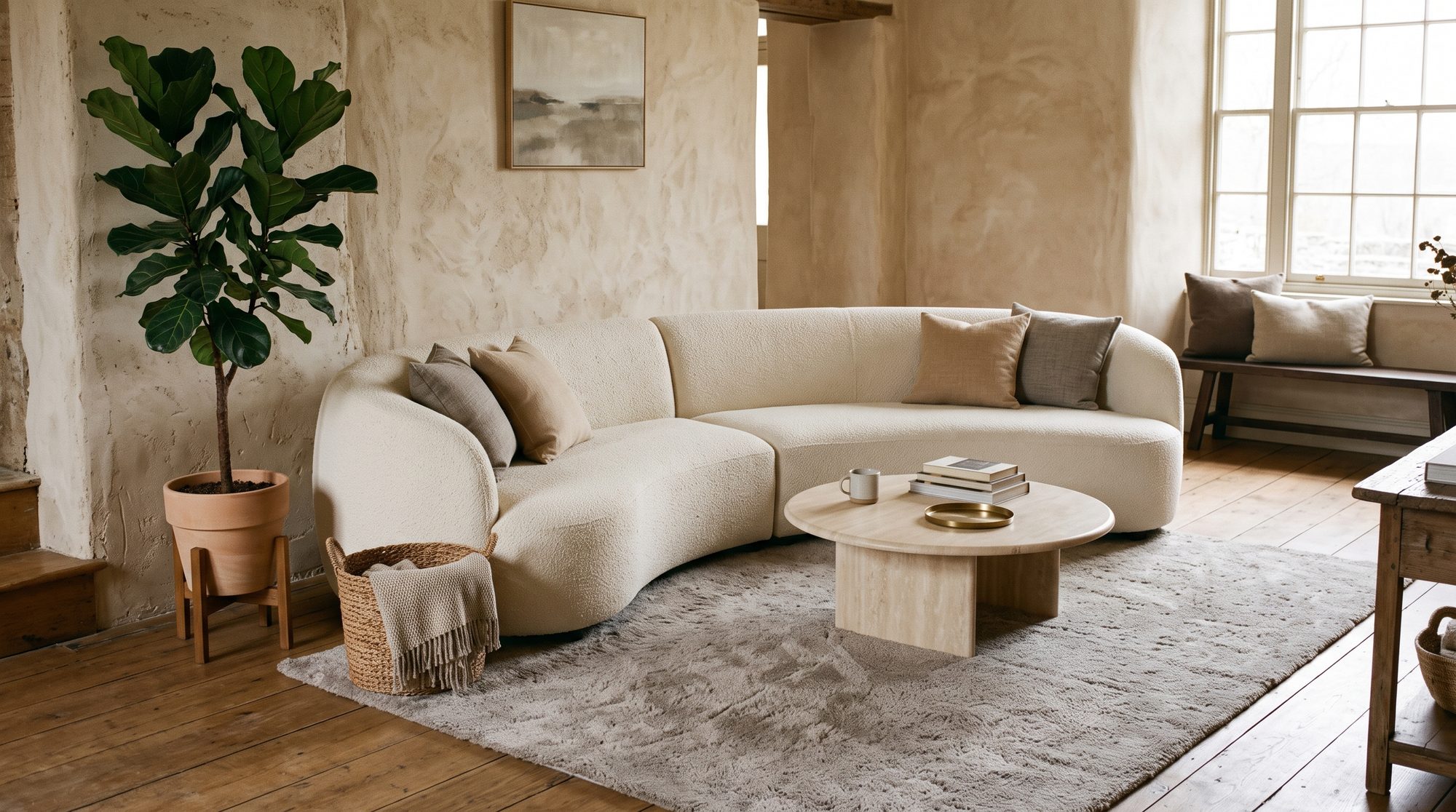
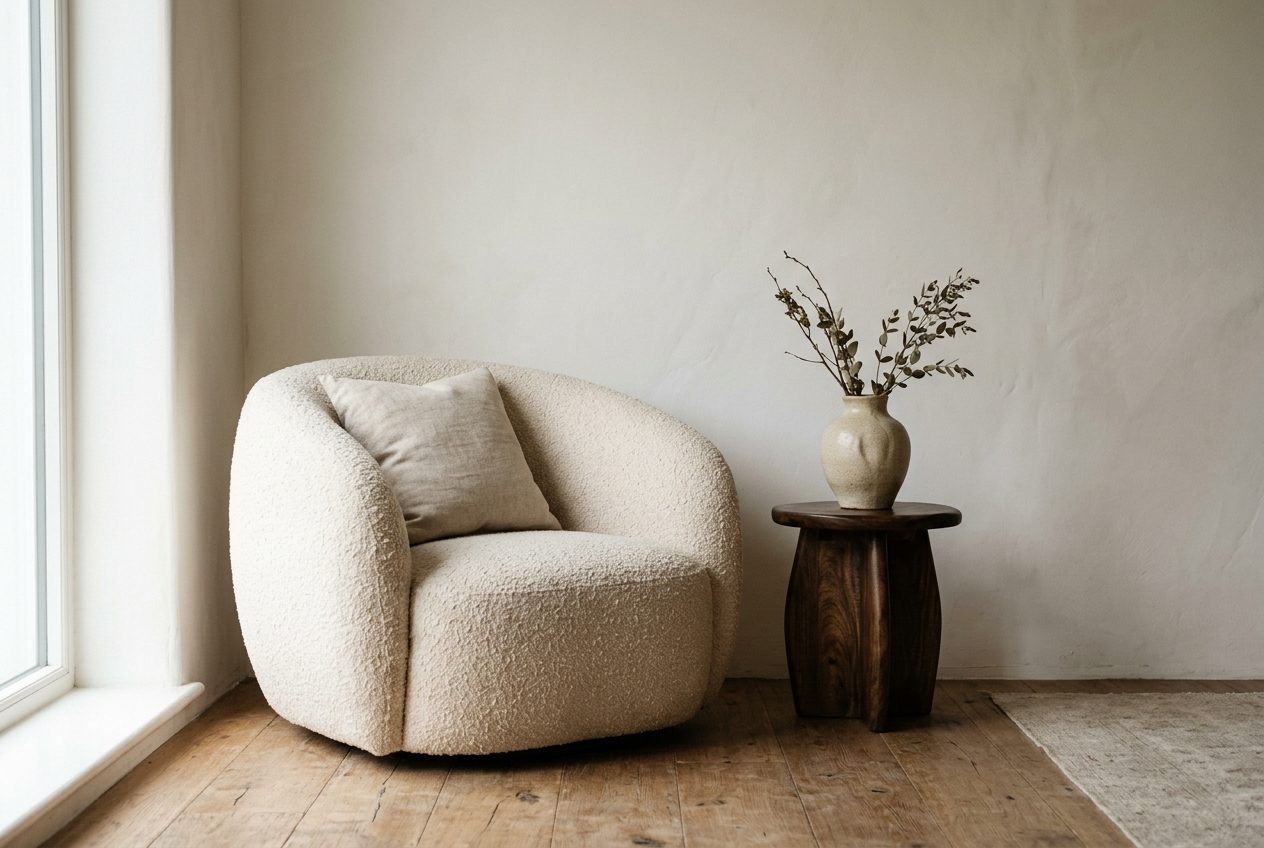
Walk through any furniture showroom this year and you will see it immediately. The sofa with the gentle arc instead of a back. The serpentine shape that curls at one end. Coffee tables shaped like a puddle. Armchairs that look like they were made out of one piece of something soft.
This is the biggest shift in furniture shape in years, and it is not a styling accident. Curves do a specific job in a room, and once you know what the job is you can tell in about a minute whether your own room wants one.
What a curve actually does
A curved sofa breaks the grid. Most rooms are a box, and most furniture is boxes inside the box, all parallel to the walls. Everything lines up and nothing invites you to sit down. A curve cuts across that. It pulls the seating into a loose circle so people face each other slightly rather than facing the television in a row.
It also softens a hard room. If you have plaster walls, a concrete floor, big windows and not much fabric, a curved piece takes the edge off in a way that a cushion cannot.
And it moves you through a space. A curved back guides you around it rather than stopping you, which is why curves often appear in open plan rooms where the sofa is also the wall between the sitting part and the eating part.
Where a curve goes wrong
In a small square room, a curved sofa eats floor. The back of the arc pushes away from the wall, and the gap behind it is space you paid for and cannot use. A straight sofa against the wall in a small room gives you a metre of floor that a curve takes away.
Against a wall of built in shelves or a run of cabinets, the curve argues with the straight line behind it, and the eye goes to the gap rather than the furniture.
In a room where the seating has to serve a television, a curve means somebody is always sitting at an angle to it. That is fine in a room for talking and annoying in a room for watching.
The quick test: stand in the doorway and look at where you want people to look. If the answer is at each other, a curve helps. If the answer is at a screen or out of a window, a straight line usually wins.
The quieter trend underneath it
Modular is the one that will outlast the curves. Sofas that come in pieces you can rearrange, backrests that move, poufs with storage inside them, side tables light enough to pick up with one hand. The reason is simple: people move house more, rooms do more jobs than they used to, and a sofa that only fits one wall of one flat is an expensive mistake.
If you are spending real money this year, the modular question is worth more of your attention than the shape question. A curved sofa is a look. A modular one is a sofa that survives your next move.
Low seating is the third piece of it. Sofas are sitting closer to the floor than they did five years ago, which makes a room with a normal ceiling feel taller. It also makes getting up harder, so try it before you decide it is for you.
Before you buy a curve
Measure the deepest point, not the width. A curved sofa is deeper in the middle than the measurement on the tag suggests, and that middle is the part that eats your floor.
Then look at it in your own room rather than in the showroom. A curve in a showroom is surrounded by air and lit from above, and almost anything looks good like that. The same piece against your actual wall, with your actual rug, is a different object. Seeing that before the delivery van arrives is the whole difference between a piece you love and a piece you get used to.