October 4, 2026 · 6 minutes
The matching set is over, and your room is better for it
Three pieces of furniture in one wood, bought together, delivered together. That was how it was done. This year it is wood against bouclé against stone against brass, and it looks like somebody lives there.
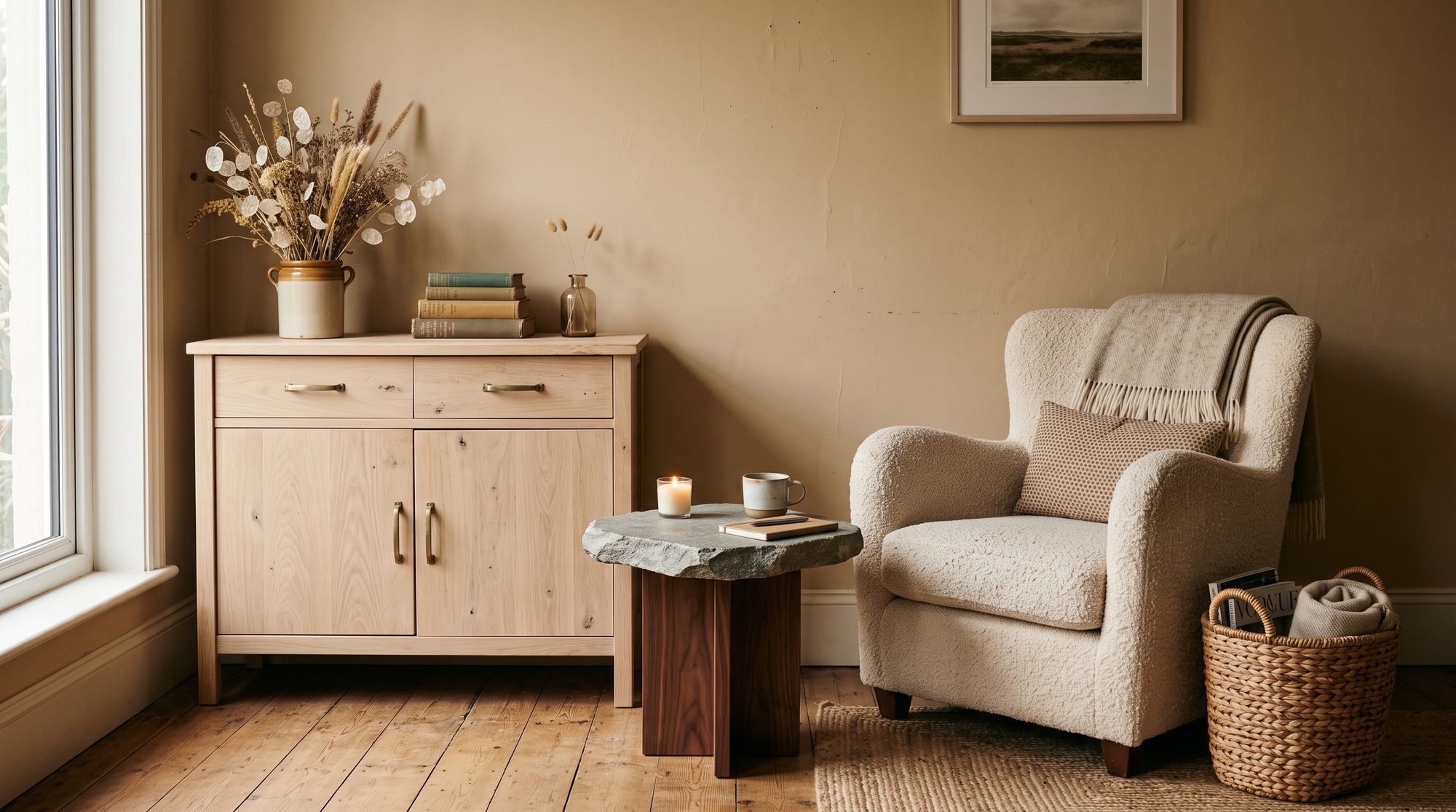
There is a particular kind of room where everything matches. The coffee table is the same wood as the side table, which is the same wood as the sideboard, because they came from the same page of the same catalogue. Nothing about it is wrong. Nothing about it is interesting either.
What designers have been doing instead, and what the trade has finally caught up with this year, is building rooms out of contrast. Solid wood in two or three different tones. Bouclé next to rattan. A stone top on a wooden base. One warm metal running through the whole thing. The room looks collected rather than ordered.
Texture is doing the work colour used to do
When a palette is quiet, and the 2026 palette is very quiet, the interest has to come from somewhere else. It comes from what things feel like. A wheat coloured room with a flat painted wall, a flat rug and smooth upholstery is a dull room. The same colours in plaster, wool and bouclé is a room you want to sit in.
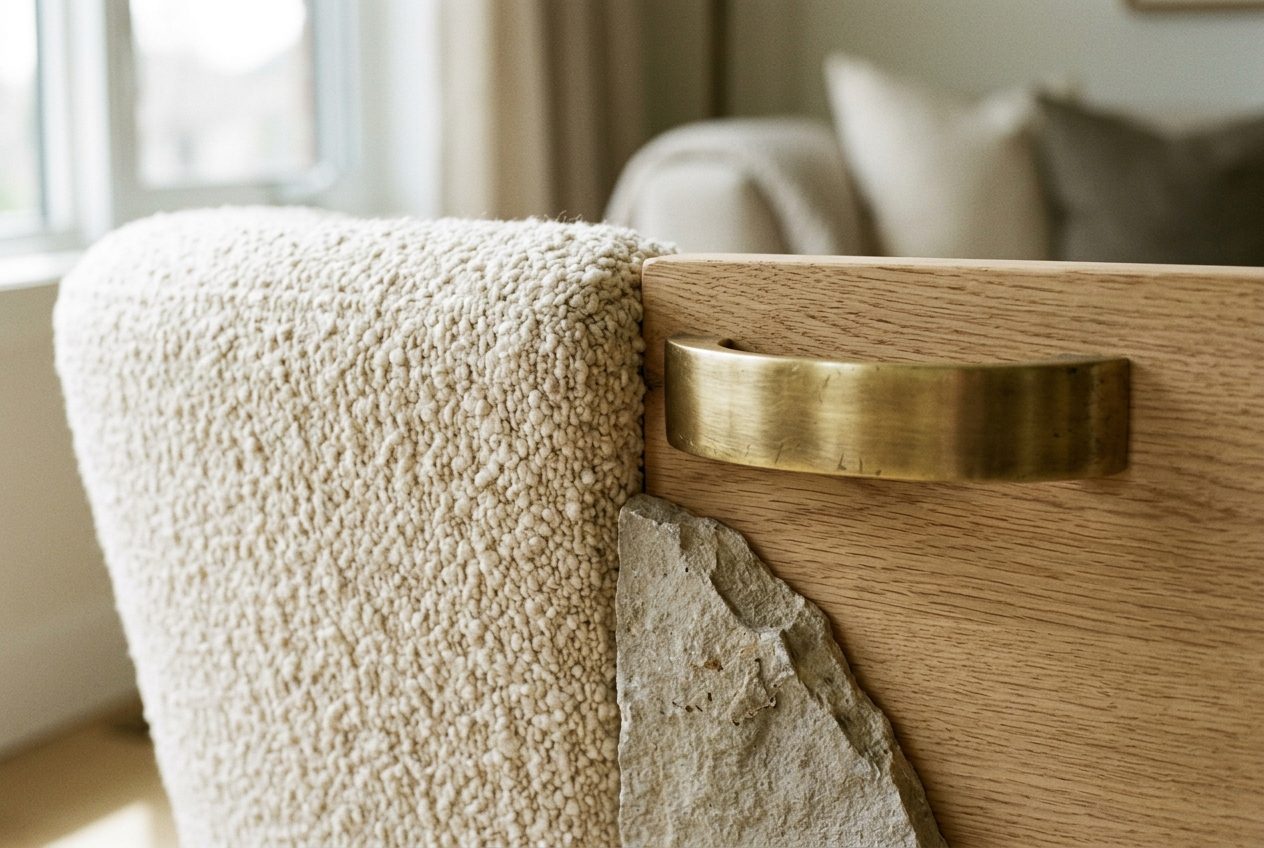
This is why the materials list this year reads the way it does. Bouclé for the loops that catch light. Rattan and cane for the gaps. Linen for the slight crumple. Unpolished stone for the matte. Plaster finishes on walls for the depth that flat paint cannot do. None of it is loud, and together it is not quiet at all.
How to mix without making a mess
Two or three woods, not five. If you are mixing wood tones, make them clearly different rather than nearly the same. A pale oak and a dark walnut look deliberate. A pale oak and a slightly different pale oak look like a mistake, because the eye reads it as a failed match instead of a choice.
One metal everywhere. This is the rule worth keeping. Brushed brass, warm bronze, matte black or soft chrome, pick one and let it run through the handles, the lamp, the legs and the frame of the mirror. It is the thread that holds the rest together.
Repeat every material at least twice. One lonely piece of marble in a room full of wood looks like it wandered in. The same marble on a table top and a lamp base looks like somebody meant it. Two is a decision, one is an accident.
Keep one thing plain. A room where everything has texture is as tiring as a room where nothing does. A flat painted wall or a plain rug gives the eye somewhere to rest.
What this means if you are buying piece by piece
The good news is that the matching set going out of fashion is the best thing to happen to a normal budget. You no longer have to buy three things at once from one shop to look as though you know what you are doing. You can buy the sofa now, the chair in six months, and the table when you find the right one, and the room will look better for the gaps between them.
What you do need is a thread. Pick the thing that will not change: usually the floor, sometimes a big piece you already own. Then choose each new piece against that one rather than against the last thing you bought. That is how rooms end up looking collected instead of accidental.
And the part everybody skips
Mixing materials is much harder to imagine than matching them, which is exactly why the matching set existed. Nobody can hold a bouclé chair, an oak floor and a stone table in their head at the same time and know whether it works.
So do not hold it in your head. Put the piece you are considering into a photograph of the room it is going into, with the floor you actually have and the light you actually get, and look at it. If it fights, you will see it in a second, and it will have cost you nothing. That is the whole reason this app exists.